A working set of references, not a shopping list
This page gathers the reading material, worksheets, and reference tables that readers ask about most. Everything here is organized by the question it answers rather than by format.
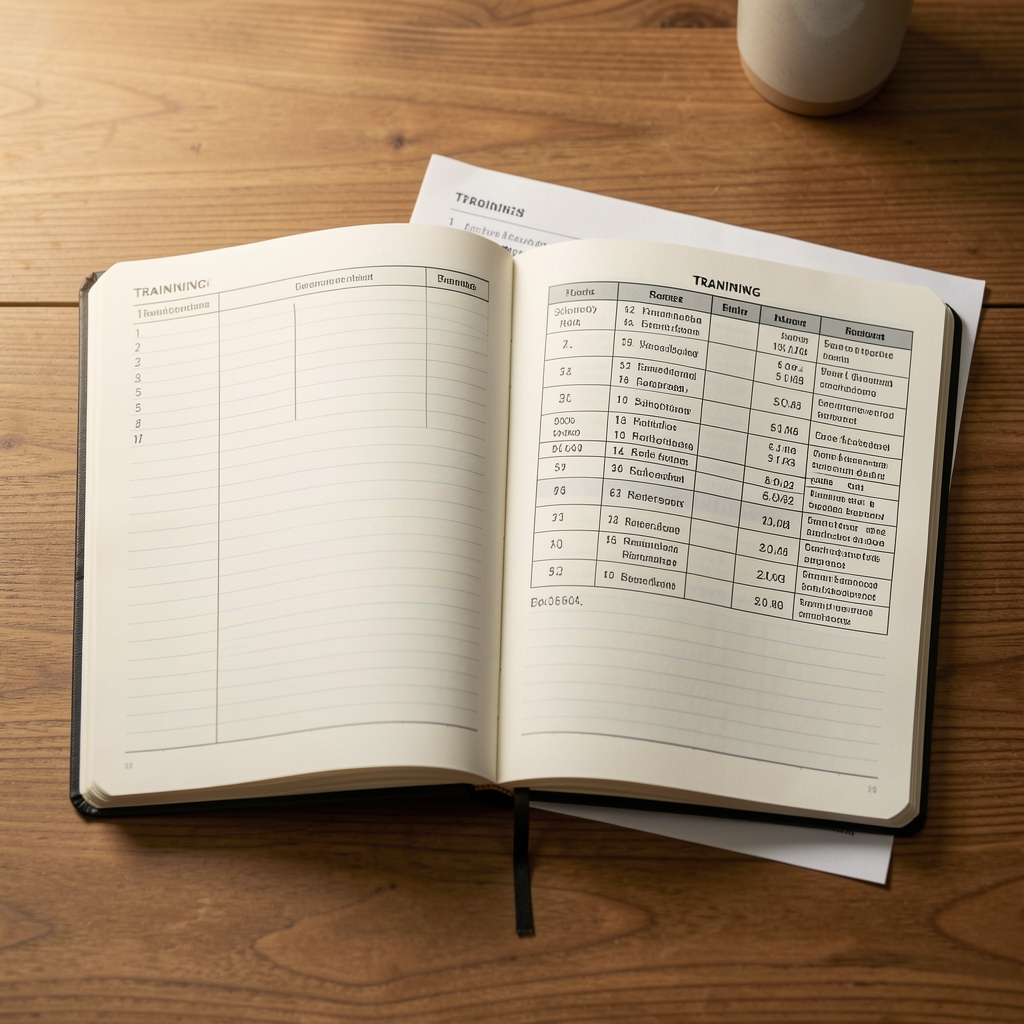
How this library is organized
Rather than a single long list, the resources below are grouped by the stage of a training year they typically support: planning, in-season tracking, and periodic review. Many readers start at planning in January or September and revisit tracking resources weekly throughout a training block. The review materials are designed for use every eight to twelve weeks, matching common periodization cycles discussed on our methodology page.
Planning worksheets
Templates for laying out a training block across weeks, including space for noting life-load factors such as work travel or irregular sleep.
Weekly tracking sheets
Simple tables for logging session type, perceived effort, and recovery notes without requiring a dedicated app.
Review checklists
Prompts for an honest look back at a training block — what held up, what needed adjusting, and what to carry forward.
Reference tables worth keeping handy
| Resource | Best used for | Suggested review frequency |
|---|---|---|
| Perceived exertion scale (1-10) | Rating session difficulty without equipment | Every session |
| Sleep and recovery log | Spotting patterns between rest and performance | Weekly |
| Mobility baseline chart | Tracking range-of-motion changes over months | Every 6-8 weeks |
| Nutrition timing notes | Reviewing meal spacing around sessions | Monthly |
| Block review template | Summarizing a completed training cycle | End of each block |

Why printed or simple tools often outperform complex apps
Many readers assume more sophisticated tracking produces better outcomes, but consistency is usually the deciding factor, not sophistication. A one-page weekly log that gets filled in honestly tends to outperform a detailed app that gets abandoned after three weeks. The resources on this page are deliberately simple for that reason.
That said, for readers who prefer digital tools, the same structure described in our worksheets can be replicated in any spreadsheet or note-taking app. The specific tool matters far less than the habit of reviewing it at a consistent interval.
A short checklist before starting a new resource
- Does this resource answer a question you are currently facing, or is it interesting in the abstract?
- Can you realistically update it at the frequency it calls for?
- Does it duplicate something you are already tracking elsewhere?
- Will you review it at a set interval, or will it sit unopened?
- Choose one planning resource for the upcoming block.
- Pair it with a single weekly tracking sheet.
- Set a calendar reminder for the review checklist at the end of the block.
A note on external references
Where this site references population-level research or general physiological concepts, the intent is educational framing rather than individualized advice. Readers managing a specific health condition should bring any tracked data to a qualified clinician rather than interpreting it independently.
Related reading
Pair this library with our methodology page for a deeper look at how training blocks are typically structured, or visit the testing page for guidance on establishing your own baseline figures.
View our methodology